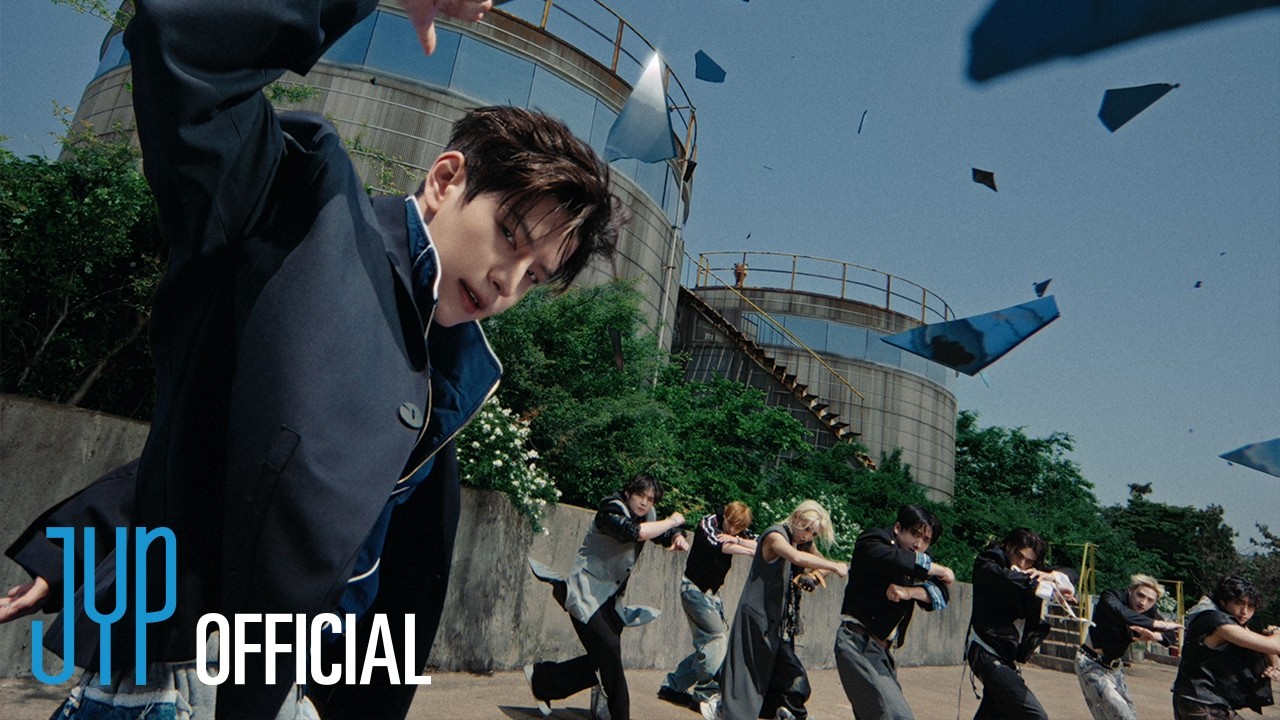
01The Title — 이것저것 and the Refusal to Choose
The English title “This & That” is the translation of a single Korean phrase: 이것저것 (igeotjeogeot) — an everyday compound expression meaning “this and that,” “various things,” “all kinds of things.” In Korean daily usage, 이것저것 typically describes scattered, miscellaneous activity — “I’ve been doing this and that,” meaning nothing in particular, a range of different things. It carries a slightly breezy, uncommitted quality in ordinary speech.
The chorus makes the reframe explicit through its pair-based structure: cappuccino and americano, coupe and truck, fast and slow. Each pair presents two opposite or different options and then refuses to select between them. The song’s philosophical position is that the ability to hold multiple seemingly contradictory things simultaneously — to have this and that rather than this or that — is not greed or indecision. It is capability.
이것 (igeot) means “this thing” and 저것 (jeogeot) means “that thing.” Combined into 이것저것, the two demonstrative pronouns merge into a compound that means “various things” or “a bit of everything.” The construction is slightly informal and conversational — it’s the kind of phrase you’d use telling a friend what you’ve been up to when you’ve been doing many small things rather than one big thing. The song takes that casual, everyday range and makes it sound like a superpower: not “I haven’t focused on anything” but “I have range in everything.”
02Key Lyrics — Korean, Romanization & English Translation
The song moves between Korean verses and a predominantly English chorus — the Korean carries the most specific self-description and the sharpest wordplay, while the English chorus delivers the song’s central claim in the most portable, internationally chantable form. Below are the passages that do the most work.
The Korean Verse — Dense Rhyme, Specific Claims
이것저것 ready 된 지 이미 오래됐지
Yeah 지루함은 뺐지 그건 오래전에 패치
내 왼쪽 가슴속에 박힌 Stray Kids 배지
발자취에 남은 체취 채취해서 꿈을 sketch
The Korean verse’s wordplay is more technically complex than the song’s relaxed delivery suggests. The rhyme density — 오래됐지/패치, 가슴속에/배지, 체취/채취 — is the kind of internal rhyme structure that characterizes 3RACHA’s more intricate writing, even when the musical atmosphere is deliberately cool and unhurried. The skill is in making the craft invisible beneath the ease.
The Chorus — Pairs Without Having to Pick
| English | Cappuccino and americano / I’ll take this and that, this and that / Imma rip a show and then hit the studio / I do this and that, this and that |
| English | We can go fast, we can go slow / If you can’t choose, you can have both |
The chorus builds its argument through accumulating pairs: cappuccino and americano (two different coffee orders, both accepted), coupe and truck (luxury and utility), fast and slow (opposing paces). Each pair represents a choice that most people would have to make — and the song’s answer to each is the same: both. “If you can’t choose, you can have both” is the chorus’s most direct statement of its own philosophy, delivered as an invitation rather than a boast.
The coffee pairing — cappuccino and americano — is the most resonant for Korean audiences familiar with the group’s history. Stray Kids have built an extended concept across multiple releases around coffee culture, culminating in the “Coffee” concept that THIS & THAT is described as extending. Ordering both cappuccino and americano isn’t indecision; in that context, it’s a confident and specific statement about having the range to handle both registers — sweet and complex alongside sharp and direct.
Stray Kids’ “Coffee” concept has developed across several releases as a recurring aesthetic and thematic thread. “This & That” is described as extending that concept in a “dark roast” direction — richer, more mature, with more depth than a lighter roast. Choosing both cappuccino and americano in the chorus is, within that established concept, also choosing both the sweeter and the more bitter, the smoother and the sharper. The song drinks all of it.
The Bridge — Challenge Met With Confidence
| Korean | 더 보여줄 거 없냐는 너에게 (이것저것 다) |
| Romanization | Deo boyeojul geo eopnyaneun neoege (Igeotjeogeot da) |
| English | To you who asks whether there’s anything more to show / (All of this and that) |
The bridge introduces the only external voice in the song — someone asking whether there’s anything more to show, implying they may have seen enough already. The response is not a detailed answer but the title phrase itself, in full: 이것저것 다 — all of this and that. Everything. The answer to “is there more?” is the entire catalog, all at once, offered without itemizing it. The confidence is in the completeness of the gesture rather than any specific proof.
03Stray Kids — Eight Years In, Still Setting the Terms
Mini album — most prolific mini-album count of their generation
Since debut — March 25, 2018
Total runtime — 8 tracks in under 26 minutes
A larger external writing team than “RUN IT” — consistent with the title track’s cooler, more pop-forward sound requiring different production expertise than the brass-driven anthem that opens the album.
The Monsters & Strangerz — a production team responsible for major pop hits across multiple global markets — bringing a polished, internationally calibrated pop arrangement to 3RACHA’s lyrical core.
JYP Entertainment’s official album description. The title track enacts the concept directly: rather than choosing between one option or another, Stray Kids take both — and the album across eight tracks shows what “both” sounds like across multiple genres and moods.
To mark the album’s release, the Namsan Seoul Tower held a lighting event on the night of August 7 — a large-scale public celebration tied to the release that signals how the group and their label are positioning this album within South Korean cultural life.
04THIS & THAT — Eight Tracks, Multiple Registers
RUN IT
Pre-release / brass anthem / June 24 single
This & That
Title Track
After You
Electropop breakup track
FARMING
Felix baritone feature / Gen Alpha internet slang / hustle culture
I Do
Way Out
R&B goodbye
Back Then
Nostalgic ballad
This & That (Festival Version)
Album closer / live-ready rework of the title track
The album’s track sequence enacts the “this and that” philosophy in its own structure. RUN IT opens with brass anthems and stadium scale. The title track arrives cool and conversational. After You is a breakup song with electropop production. FARMING is a hustle-culture exploration that deploys Felix’s distinctively low baritone alongside Gen Alpha internet slang. Way Out is R&B. Back Then is a nostalgic ballad. And the album closes with a Festival Version of the title track — built for a live crowd rather than headphone listening, making the album’s last word the same as its second, but transformed by context into something new.
That the album closes with the title track reworked for festival performance rather than an entirely new piece is consistent with the “this and that” philosophy taken to its structural conclusion: the same song, different register, both valid, both included. The album itself is the argument the title track makes.
05The Songwriting — Confidence as a Structural Choice
“This & That” is a deliberately unusual title track for Stray Kids — a group whose most recognizable lead singles have tended toward high-intensity, maximalist production (MANIAC, Chk Chk Boom, MIROH). “This & That” is mid-tempo, conversational, and built on cool confidence rather than peak energy. That contrast is not incidental.
Ease as Confidence’s Highest Register
The most confident thing a group can do after eight years of delivering high-intensity anthems is to make a title track that doesn’t need to shout. “This & That” makes its claim quietly — not because the claim is smaller, but because the person making it no longer needs to raise their voice to be heard. The song sounds like what it describes: someone who has been ready for a long time and doesn’t need to prove it by straining.
Korean Wordplay Beneath a Relaxed Surface
The internal rhyme density of the Korean verse — the 패치/배지/매치 chain, the 체취/채취 sound play, the triple-stacked imagery of footprints, scent, and harvesting — sits beneath a delivery that sounds unhurried. This is technically demanding writing presented in a way that makes the technique invisible. It rewards close reading without demanding it. The song works as pure vibe for listeners who aren’t tracking the wordplay, and rewards the ones who are.
박히다 as the Song’s Most Specific Image
The choice of 박히다 (to be embedded, driven in) for the Stray Kids badge in the chest is the song’s most quietly precise lyrical move. The badge isn’t worn — it’s structural, lodged in the body, left-side, where the heart is. After eight years, the group identity is not something that can be removed. It is the foundation everything else is built on. That image, delivered with the same relaxed ease as every other line in the verse, is the song’s most personal and most durable moment.
| Technique | Example | Effect |
|---|---|---|
| 이것저것 reframed from vague to abundant | Title + chorus / “All of this and that” | Everyday expression of scattered activity becomes a declaration of range |
| Pair-based refusal to choose | Cappuccino and americano / coupe and truck | Each pair demonstrates having both rather than selecting one |
| 박히다 for group identity | 내 왼쪽 가슴속에 박힌 Stray Kids 배지 | Identity is structural, not worn — embedded eight years deep |
| 패치 (patch) for boredom removal | 지루함은 뺐지, 그건 오래전에 패치 | Tech vocabulary makes boredom-removal sound systematic, long completed |
| Ease as confidence’s highest register | Mid-tempo production over maximalist anthem | Not needing to shout is itself the statement after eight years |
06Key Vocabulary — Words Worth Knowing
| Korean | Romanization | Meaning & Notes |
|---|---|---|
| 이것저것 | igeotjeogeot | “This and that” / “all kinds of things” — everyday compound from 이것 (this thing) + 저것 (that thing); reframed from vague scatteredness to confident abundance |
| 패치 | paechi | Patch (from software/gaming) — used for removing a bug or flaw; here, boredom is treated as a corrected defect, removed long ago |
| 배지 | baeji | Badge — used here for the Stray Kids identity mark; rhymes with 패치, 패티, 매치 in the verse’s dense internal rhyme chain |
| 박히다 | bakhida | To be embedded / driven in — used for a nail, a thorn, something fixed in place; here, the badge is not worn but structurally embedded in the chest |
| 발자취 | baljachui | Footsteps / traces — the marks left by a path taken; used alongside 체취 and 채취 for the verse’s triple sound-play |
| 체취 | chechwi | Body scent / personal smell — the olfactory trace left by a person; sound-matches 채취 in the verse |
| 채취 | chaechwi |
The verse’s most technically impressive moment is a three-word chain where 발자취 (footprints/traces), 체취 (body scent), and 채취 (to gather/collect) share the same final syllable sound — -취 — while each meaning something different. The line reads: gather the scent left in your footsteps to sketch out a dream. The meaning is poetic and specific: what’s collected isn’t achievement or acclaim, but the personal trace — something sensory, intimate — left by the path already taken. That trace becomes the material for what comes next. In a song about having this and that, including everything, the verse also includes the past: not discarded but harvested.
— Why “This & That” Works as the Statement It’s Trying to Be
“This & That” succeeds by refusing what most K-pop title tracks consider mandatory. No dramatic build to a climactic drop. No challenge to prove worth through intensity. Just the relaxed presentation of a group that has been ready for a long time and doesn’t need to explain itself by straining.
The philosophical claim — that having it all isn’t greed but simply an accurate description of their range — is the kind of claim that only lands if the delivery matches it. A song about not needing to choose, delivered nervously, would undercut itself. A song about confidence, delivered with strain, would contradict its own premise. “This & That” delivers its argument with the exact register the argument requires: ease.
이것저것 다. All of this and that. Eight years of badges embedded in the chest. Scent collected from every footstep taken. Cappuccino and americano, both. Coupe and truck, both. Fast and slow, both. The world asked whether there was anything more to show. The answer, as always, is everything — offered without raising the voice, because the voice doesn’t need raising anymore.