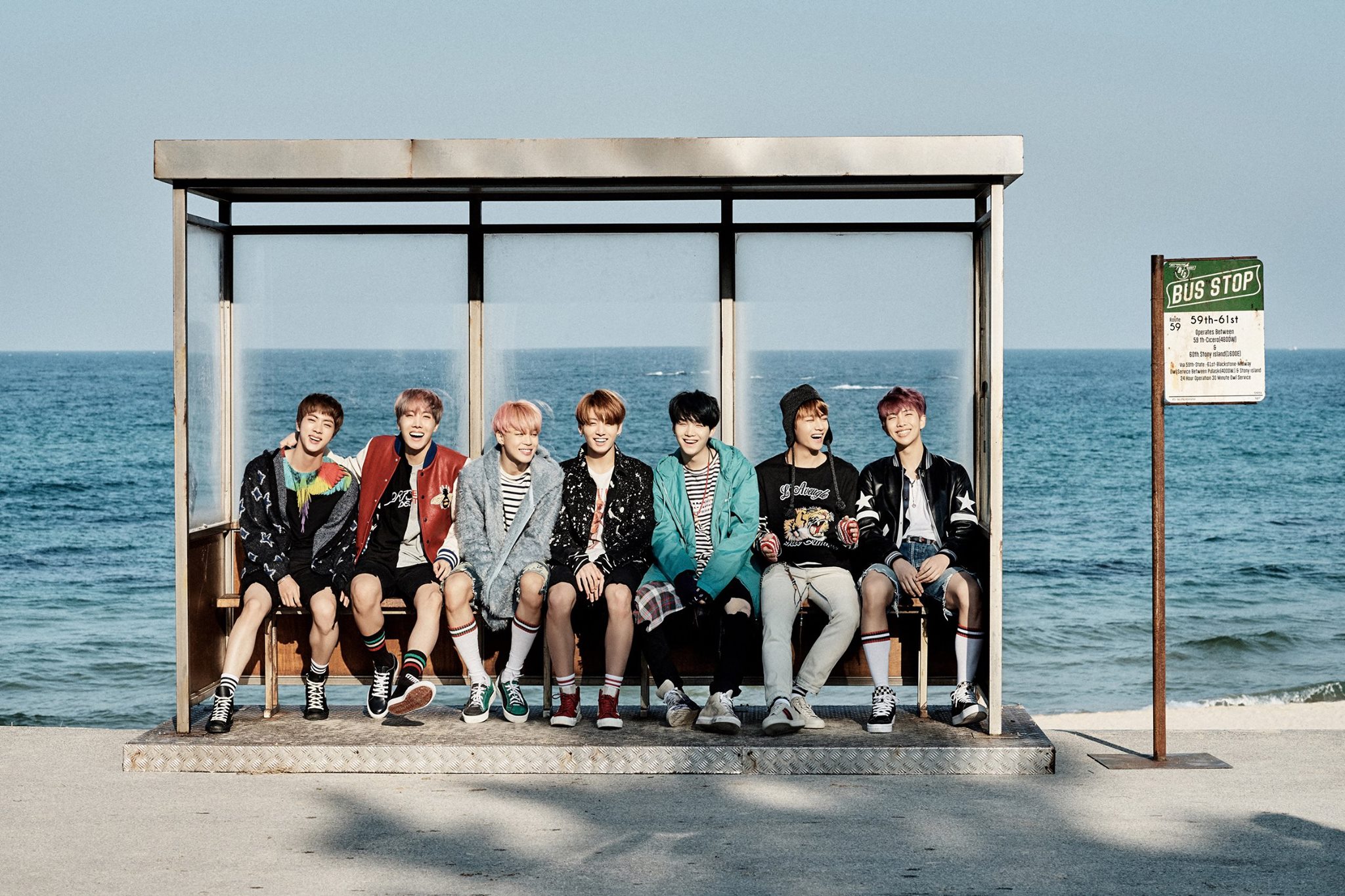
Overview
“봄날 (Spring Day)” was released on February 13, 2017, as the lead single from You Never Walk Alone. It is BTS’s most-streamed ballad globally and one of the most culturally layered songs in the group’s discography. On the surface, it is a song about missing someone. Beneath that surface, it holds references to literary fiction, Korean national grief, and a meditation on whether time itself can be an act of cruelty.
This analysis covers the four most-searched aspects of the song among English-speaking fans: the opening lines, the Snowpiercer verse, the closing affirmation, and the widely discussed Sewol Ferry connection.
01 The opening — what “보고 싶다” actually means
보고 싶다 / 이렇게 말하니까 더 보고 싶다
Bogo sipda / Ireoke malhanikka deo bogo sipda
“I miss you — saying it like this makes me miss you even more.”
The English phrase “I miss you” is a statement of condition. 보고 싶다 is something different. It translates literally as “I want to see you” — the missing is expressed not as an emotional state but as a physical desire for presence. To miss someone in Korean is to hunger for the specific experience of their face, their body in a room. English mourns an absence; Korean reaches toward a presence that isn’t there.
The second line deepens this. Saying “보고 싶다” out loud makes the feeling more real, not less. Language doesn’t relieve the longing — it amplifies it. The act of naming grief is itself a kind of grief.
Language note
보고 싶다 is one of the first phrases Korean learners encounter, but its emotional register is easy to underestimate. The verb 보다 (to see) combined with 싶다 (to want/desire) creates a longing that is fundamentally visual and physical — not abstract. Many fans cite this distinction as the moment they understood why direct translation always loses something.
02 The Snowpiercer verse — a train running through winter
홀로 남은 설국열차 / 니 손 잡고 지구 반대편까지 가 / 이 겨울을 끝내고파
Hollo nameun seolgungnyeolcha / Ni son jabgo jigu bandaepyeonkkaji ga / I gyeoul kkeunnaegopa
“Alone on the Snowpiercer / I want to take your hand and go to the other side of the earth / I want to end this winter.”
설국열차 is the Korean title of Bong Joon-ho’s 2013 film Snowpiercer. In the film, the last survivors of a frozen apocalypse circle the earth endlessly on a train — unable to stop, unable to leave, trapped in motion that goes nowhere.
BTS uses this image precisely. The singer is not on a train going somewhere — they are on a train going everywhere and nowhere, circling endlessly because there is no destination without the person they’ve lost. The train is not escape; it is the shape of grief itself: motion without arrival.
The line “지구 반대편까지 가” (go to the other side of the earth) transforms the image. The Snowpiercer of the film cannot stop. But the singer’s version can — if the right hand is there to hold. The presence of another person is the only force that could break the loop.
Cultural reference
RM has spoken publicly about Bong Joon-ho’s Snowpiercer and Ursula K. Le Guin’s short story “The Ones Who Walk Away from Omelas” as direct inspirations for the song and video. The Omelas reference — a utopia sustained by one hidden child’s suffering — becomes particularly significant when read alongside the Sewol interpretation in section 04.
03 The closing affirmation — the most-quoted lines
You know it all / You’re my best friend / 아침은 다시 올 거야 / 어떤 어둠도 어떤 계절도 / 영원할 순 없으니까
Achimeun dasi ol geoya / Eotteon eodumdo eotteon gyejeoldo / Yeongwonhal sun eopseunikkа
“You know it all / You’re my best friend / Morning will come again / Because no darkness, no season / can last forever.”
After verses built from longing and isolation, the song closes not with reunion but with the promise of change. 아침은 다시 올 거야 — morning will come again — is the emotional turning point. The Korean grammatical ending 거야 carries soft certainty: not a command, not a wish, but a quiet confidence that what has been will shift.
The two English lines sit inside a Korean song without translation. The switch is deliberate — in 2017, BTS was speaking simultaneously to Korean fans and an emerging global audience. These two lines function as a direct address across that boundary: wherever you are, whatever language you speak, you are included in this.
영원할 순 없으니까 (because nothing can last forever) is the lyrical fulcrum. It applies in both directions. The winter cannot last — but neither can the spring. The song’s comfort is not that grief ends. It is that nothing is permanent, which means grief itself is subject to the same law as everything else.
04 The Sewol layer — what the music video is really showing
BTS has never officially confirmed that “Spring Day” is about the Sewol Ferry disaster. What follows is a widely held fan interpretation, supported by visual evidence in the MV and a 2020 Esquire interview in which Jin acknowledged the song references “a sad event.” It should be read as interpretive analysis, not confirmed fact.
On April 16, 2014, the MV Sewol — a passenger ferry travelling from Incheon to Jeju Island — capsized and sank. Of the 476 people on board, 304 died. More than 250 were second-year high school students on a school trip. The students were told by crew to stay in their cabins and await rescue. Rescue did not come in time.
The disaster was broadcast live as Korea watched the ship disappear beneath the water. It became a defining wound in modern Korean national memory — grief not just about death, but about institutional failure, about the people in authority who were supposed to protect the young and did not. Three years later, BTS released “Spring Day.”
Key Symbol
| Korean | 노란 리본 |
| Romanization | Noran ribon |
| Meaning | Yellow ribbon — the national symbol of Sewol remembrance, tied to fences, worn on lapels, and displayed across Korea in the aftermath of the disaster. |
MV Symbols — What Fans Identified
🎡 The yellow ribbons
Tied around the carousel in the MV. Yellow was the national color of Sewol mourning — worn by families, tied to fences outside schools, and displayed in shop windows across Korea in 2014 and the years that followed.
👟 Shoes on the shore
Jimin holds a pair of sneakers near the ocean. After the Sewol sank, victims’ shoes washed ashore and were left at memorials by grieving families — a specific, documented image from the aftermath that became part of the disaster’s visual memory.
🧥 The pile of clothing
A large mound of clothes appears in the MV. Many fans connect this to the unclaimed belongings of the Sewol victims — clothing that outlasted the people who wore it.
🏨 Motel Omelas
The members stay at a motel named “Omelas” — a direct reference to Le Guin’s story about a utopia sustained by one child’s hidden suffering. The Sewol reading shifts the interpretation from personal grief to collective moral responsibility: the story of a society that kept its “spring” while leaving its children to drown in the dark.
🌙 Jungkook alone
The youngest member wakes to find himself alone, his friends gone. In Korean fan analysis, Jungkook’s 1997 birth year places him in the same generation as many of the high school victims — old enough to understand, young enough to have been one of them.
📸 The concept photos
The You Never Walk Alone comeback used yellow text on black backgrounds — the same visual language as the memorial ribbons and vigil signs displayed across Korea in 2014.
Why this song endures
“Spring Day” is BTS’s longest-charting song on Korean charts — re-entering the top 10 repeatedly across seven years, including surges during periods of national grief. Its staying power comes from structural ambiguity: the song never names who is missed, never explains the loss, never resolves whether the person is gone by choice, by death, by distance, or by change.
That openness is not a weakness. It is the architecture of the song’s endurance. Making the Sewol connection explicit would have collapsed it into one reading. Leaving it open let the song become simultaneously a personal love song, a meditation on grief, and a quiet political statement — all without ever saying so directly.
The winter in “Spring Day” cannot last forever. But the song also knows spring is not guaranteed to stay. What endures is the act of waiting — and the small certainty that morning, eventually, comes again.
Key vocabulary
Key Vocabulary
| Korean | Romanization | Meaning |
|---|---|---|
| 보고 싶다 | Bogo sipda | I miss you (lit. “I want to see you”) |
| 설국열차 | Seolgungnyeolcha | Snowpiercer (lit. “snow country train”) |
| 겨울 | Gyeoul | Winter |
| 봄날 | Bomnal | Spring day |
| 아침 | Achim | Morning |
| 영원 | Yeongwon | Eternity / lasting forever |
| 눈꽃 | Nunkkot | Snow flower (poetic: snowflake) |
| 노란 리본 | Noran ribon | Yellow ribbon (symbol of Sewol remembrance) |
© BTS Official SNS / BigHit Ent.